Bingo Classic - Bingo Games
- 4.9
- Rating
- 5.00M
- Installs
- Free
- Price
 Analysis by App-foxy
The first time I opened Bingo Classic - Bingo Games, I understood its appeal almost immediately: it takes a familiar board-game format and gives it a light, colorful setting that is easy to enter without a tutorial-heavy commitment. I played it in short sessions rather than treating it like a game that demanded my full attention, and that is where it feels most comfortable. It is a free board game from Absolute Lucky Pig Games, built around classic bingo, progression, goals, and themed presentation.
That simplicity is both its greatest strength and its main limitation. I never felt lost, but I also never found the kind of deep strategy I would expect from a traditional competitive board game. The pleasure comes from watching a round develop, reacting quickly to called numbers, and gradually working through the game’s broader structure. If you want a relaxed time-filler with a little more shape than a plain digital bingo card, this is an easy recommendation. If you need complex decisions, direct competition, or a story-led adventure, you may outgrow it quickly.
How the presentation turns familiar bingo into a playable mood
I’ll look at how the game’s visual themes and familiar bingo rhythm work together, and why that presentation can make a simple round feel more inviting without adding needless complexity. I’ll also consider where atmosphere stops carrying the experience, which leads naturally to the question of who is most likely to enjoy it.
You May Also Like

 Blood Strike: 2.5 Anniversary
Blood Strike’s Loadouts Turn Every Drop Into a Tactical Gamble
A close look at Blood Strike’s custom loadouts: how fast access to signature weapons reshapes its battle royale rhythm, rewards preparation, and narrows the gap between fights.

 Pandora - Music & Podcasts
Pandora’s Music Is Easy to Start, but Harder to Recover
Pandora’s strength is its low-effort path from a seed to a station. Its weak spot is how much confidence it asks you to place in connection, setup, and quiet recovery.

 8 Ball Pool
 Is Built on Rivalries, Rematches, and Routine
A close look at the rivalries, rematches, shared routines, and unanswered safety questions that turn a quick pool match into a persistent mobile community.

 Samsung Music
’s Quiet Strength Is Playing What You Already Own
Its reach comes less from spectacle than from dependable access to a personal library. That simplicity is both the app’s strongest retention engine and its ceiling.

 AccuWeather: Weather Radar
AccuWeather Review: A Quick, Clear Forecast for Everyday Decisions
For everyday plans, the best forecast is the one you can understand quickly. AccuWeather makes rain timing, radar, and local conditions easy to act on, with a few trade-offs.

 Hill Climb Racing
Why Hill Climb Racing Still Turns Crashes Into One More Run
A tiny car, a bumpy hill and one more upgrade: Hill Climb Racing keeps resurfacing because its simple chaos makes every near-miss feel personal.
More From Our News Desk



A welcoming first impression for short sessions
The game’s opening experience is approachable because it does not ask me to learn a complicated ruleset before playing. The central action remains recognizable bingo, so the visual language can concentrate on making the board readable and the surrounding experience pleasant. That matters on a phone: when I have only a few minutes, I want to understand what is happening at a glance rather than study menus or memorize systems.
The progression layer gives each session a little more purpose than simply starting another random round. Levels and unique goals create a reason to return, especially for players who enjoy clearing small objectives one by one. I found that this structure works best when I treat it as a gentle routine: play a round, check what the current goal asks me to do, and decide whether I want another attempt. It encourages continuation without turning every session into a long commitment.
The free entry point is important here. I can try the core experience without paying first, which makes the game suitable for casual players who are curious about digital bingo but do not want to buy a boxed game or join a more demanding online community. Optional purchases range from $1.99 to $23.99 per item, so I would approach the store carefully and decide in advance whether I am comfortable spending. The game is most enjoyable for me when purchases remain optional rather than becoming part of my normal play routine.
The visual language is about clarity before spectacle
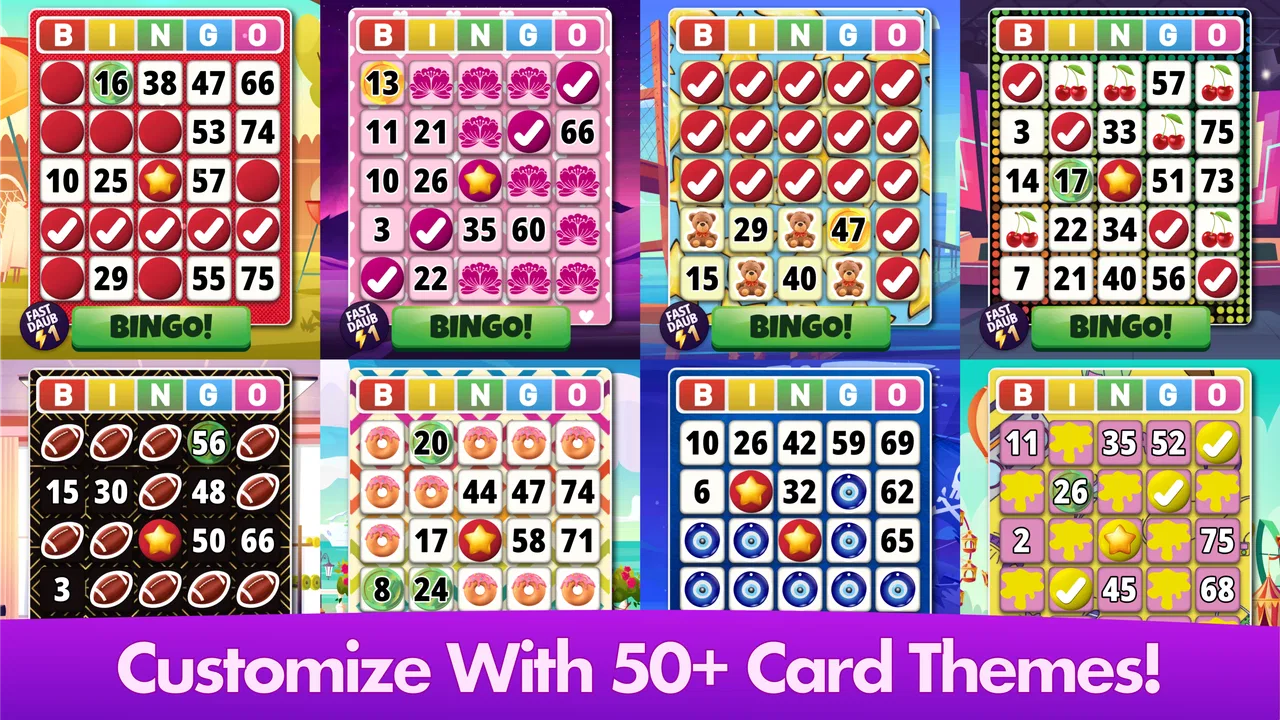
The themes give the familiar cards and number calls a more distinct identity than a bare utility-style bingo app. I do not see the presentation as trying to build a large fictional world with characters, lore, or dramatic plot. Instead, it uses changing visual moods to keep repeated rounds from feeling completely identical. That is a sensible artistic choice for this genre: the board must remain the star, while the theme adds enough personality to make returning feel less mechanical.
What I appreciate most is the relationship between decoration and usability. Bingo is a visual recognition task, so excessive ornament would work against the game. The strongest presentation choice is therefore restraint: colors and themed elements can create atmosphere, but the numbers still need to be the information I notice first. When a game gets that balance right, the setting supports the activity instead of interrupting it.
This also explains why the experience can suit different everyday moods. I can use it as a quiet distraction while waiting for an appointment, or as a small evening ritual when I want something active but not mentally exhausting. The themes help it feel like a game rather than a spreadsheet, while the familiar rules keep the mental entry cost low.
Sound and rhythm keep the rounds moving
Bingo depends on timing. Even without complicated controls, each call creates a small moment of attention: listen or look, identify the number, mark the card, and wait for the next opportunity. The sound design and pacing therefore matter more than they might in a static board game. In my experience, the rhythm works when it gives me enough time to recognize what was called without making the round feel sluggish.
The result is a particular kind of concentration. I am not planning several turns ahead as I would in chess, and I am not reacting with the speed required by an action game. I am settling into a repeated cycle of observation and confirmation. That makes the game calming for some situations, but it also means the experience can become repetitive if I play for too long at once.
I recommend treating the pacing as a reason to use short sessions rather than forcing a long marathon. A few rounds can feel pleasantly absorbing; an extended stretch can expose how narrow the central activity is. This is not a criticism of the rules so much as a reminder that bingo’s charm comes from rhythm and anticipation, not from constant mechanical novelty.
Where the mechanics fit the atmosphere
The levels and goals are a good mechanical match for the relaxed presentation. They give the player direction without changing bingo into a completely different genre. I can focus on the immediate card while still having a broader reason to continue, which creates a useful two-speed structure: the round provides moment-to-moment attention, and the progression provides longer-term motivation.
That structure is especially helpful for players who dislike open-ended casual games. In a plain bingo simulator, I might finish a round and wonder why I should start another. Here, goals can answer that question. They turn repetition into a sequence of small tasks, although the value of that system depends on how much satisfaction I get from incremental completion. Players who prefer a single definitive match may find the progression layer unnecessary.
One practical tip is to check the active goal before beginning a session instead of playing automatically. If I know what I am trying to accomplish, I can pay attention to the round in a more deliberate way. This does not transform the game into a strategy title, but it does make the same basic mechanics feel more purposeful. It is a small habit that helps prevent the experience from becoming background tapping.
Another useful distinction is between bingo as a social activity and bingo as a personal routine. This game works better for me as the latter. I can play whenever I have a spare moment, without coordinating with friends or waiting for a scheduled table. That convenience is a genuine advantage over physical bingo nights, but it also removes the conversation and shared excitement that make in-person play special. If your main reason for enjoying bingo is the group atmosphere, a digital solo experience may feel too quiet.
What the game does well for different players
I would recommend it to newcomers who want a straightforward introduction to mobile bingo, older players who appreciate familiar rules, and casual players who like collecting progress through manageable goals. The Everyone content rating also makes it broadly approachable for family settings, although I would still keep an eye on optional purchases when children use a device. The game’s basic appeal does not depend on a complicated age-specific premise, which helps it remain accessible.
It is also a reasonable choice for people who want a game that can be paused mentally between other tasks. I can begin a session without preparing a long strategy, and the recognizable format makes it easy to return after a break. That makes it more practical than many board games that require remembering a detailed position or maintaining a long campaign.
On the other hand, I would skip it if I wanted meaningful control over every outcome. Bingo includes chance by design, and the goals and levels do not remove that foundation. Players looking for tactical planning, deck construction, resource management, or direct skill-based competition should choose another board game. Likewise, anyone who dislikes repeated number recognition may find the attractive themes unable to compensate for the limited core loop.
Everyday use: a small waiting-room game
A realistic example is a delayed train or a long waiting-room visit. I can open the game, play a round without learning a new system, and stop when my turn arrives or my name is called. The levels give that spare time a little continuity, while the themes make the activity feel more intentional than scrolling through an endless feed. I do not need to remember a complicated story, find opponents, or prepare a physical board.
There is a trade-off, though. Because the game is built around repeated rounds, it can become tempting to continue simply because another objective is close. I find it useful to decide how long I want to play before starting, particularly if I am using it during a break. The design is good at making “one more round” feel natural, so a little self-control keeps the experience relaxing rather than distracting.
How it compares with other board-game choices
Compared with physical bingo, this version wins on convenience and loses on social presence. I can play alone at any time, and the themed presentation gives the digital format more personality than paper cards. But I do not get the same shared room, spoken excitement, or personal interaction. The right choice depends on whether I want bingo’s rules or bingo’s community experience.
Compared with a basic bingo app that only reproduces cards and number calls, this game has a stronger sense of ongoing progression through levels and goals. That makes it more suitable for players who need a reason to return. In exchange, the additional structure may feel like unnecessary layering to someone who wants a completely plain, no-frills round.
Compared with deeper mobile board games, it is much easier to learn and less demanding to manage. That is a strength when I want low-pressure entertainment, but a weakness when I want decisions with lasting consequences. I would choose this game for a calm break, and choose a strategy board game for an evening when I want to think carefully and feel responsible for the result.
Practical expectations before installing
The game has been available since Jun 24, 2019, and its current version is 6.8.4. It supports devices running Android 7.1 or later. Those details make it suitable for many older Android phones, though smooth performance can still depend on the individual device and how much storage or background activity it has. I would check compatibility before installing on an especially old handset.
Its audience size suggests that the format has broad appeal: the game has passed 5 million installs, with an average score of 4.8 from around 111 thousand ratings and roughly 12 thousand written reviews. I treat that popularity as useful context rather than a guarantee. A highly rated casual bingo game can still be the wrong fit for someone who dislikes chance or repetition.
The main financial question is not whether I can start for free, because I can, but whether I am willing to manage optional spending. Individual purchases sit between $1.99 and $23.99. I would play the free experience first, observe whether the progression remains enjoyable without buying anything, and only then consider spending. That approach keeps the decision connected to actual use instead of impulse.
Where the atmosphere reaches its limit
The coherent mood cannot fully hide the narrowness of the central loop. The art direction, themes, and sound rhythm make repeated bingo feel more inviting, but they do not turn each round into a new type of challenge. After a long session, I notice the repetition more clearly. The game is at its best when presentation and pacing are allowed to support a short, focused activity rather than carry hours of uninterrupted play.
I also would not describe it as a substitute for a full board-game collection. It gives me one polished style of casual play, not a range of games with different decision systems. That focus is honest and useful, but readers should choose it because they enjoy bingo, not because they expect a broad catalog of board experiences inside one app.
My final take on the playable mood
After spending time with it, I see Bingo Classic as a well-targeted casual board game whose strongest feature is the way its presentation supports the basic rhythm of bingo. The themed visuals make the experience friendlier, the sound and pacing help maintain attention, and the levels and goals give repeated rounds a modest sense of direction. Nothing here needs to be overcomplicated, and the game benefits from that restraint.
The best way to enjoy it is as a focused, short-session bingo game rather than a deep strategy experience. I would suggest trying the free version to see whether the repetition feels soothing or tedious to you. For casual players, families seeking a familiar format, and anyone who wants an easy game for spare moments, it is a convincing choice. For players who need rich tactics, strong social interaction, or constant mechanical variety, another board game will be a better match.
Overall, Absolute Lucky Pig Games has shaped a simple activity into a more inviting mobile routine without losing sight of what makes bingo recognizable. The result is not revolutionary, but it is coherent: the art, sound, pacing, and progression all point toward relaxed play. That consistency is why I would recommend it to a friend who wants something accessible, colorful, and easy to pick up whenever the day leaves a little room.
FAQs for Bingo Classic - Bingo Games
01What are the main features of Bingo Classic - Bingo Games?
Bingo Classic - Bingo Games offers a variety of exciting features, including multiple bingo rooms with unique themes, daily bonuses, and power-ups to enhance gameplay. The app also allows you to play with friends, participate in tournaments, and unlock achievements as you progress. Its user-friendly interface and vibrant graphics make it appealing for both seasoned players and newcomers.
02Is Bingo Classic - Bingo Games free to play?
Yes, Bingo Classic - Bingo Games is free to download and play. However, it does include in-app purchases that allow players to buy additional coins and power-ups to enhance their gaming experience. While these purchases are optional, they can provide an advantage in advancing through the game more quickly.
03Does Bingo Classic - Bingo Games require an internet connection?
Yes, an internet connection is required to play Bingo Classic - Bingo Games. The game relies on online features such as multiplayer mode, daily challenges, and live events that necessitate connectivity. A stable internet connection ensures a seamless gaming experience and access to all in-game features and updates.
04How can I play with friends in Bingo Classic - Bingo Games?
Bingo Classic - Bingo Games includes a social feature that allows you to connect with friends. You can invite friends through social media accounts or search for their user IDs within the app. Once connected, you can join the same bingo rooms, compete in tournaments together, and share rewards for a more interactive experience.
05Are there any age restrictions for playing Bingo Classic - Bingo Games?
Bingo Classic - Bingo Games is designed for players aged 12 and above. While the game is generally suitable for all ages due to its simple and engaging gameplay, younger players should have parental guidance, especially considering the presence of in-app purchases and online interactions with other players.
Pros
- Engaging gameplay with vibrant graphics.
- Multiple game modes keep it interesting.
- Frequent updates with new features.
- Easy to learn for beginners.
- Free daily bonuses enhance playtime.
Cons
- Contains in-app purchases for extras.
- Requires constant internet connection.
- Ads can be intrusive at times.
- Limited offline play options.
- Some features locked behind paywalls.

Bingo Classic - Bingo Games
Gallery